

Quick Answer
A passive income stream is a source of recurring income generated from investments, digital assets, businesses, or automated systems that require little ongoing effort after the initial setup. Some of the best passive income streams in 2026 include digital products, dividend investing, rental properties, affiliate marketing, content websites, online courses, automated businesses, and high-yield savings accounts.
While no passive income stream is completely hands-off, the right strategy can help you build long-term wealth, diversify your earnings, and reduce reliance on a single paycheck.
Quick Comparison: Best Passive Income Streams in 2026
| Passive Income Stream | Startup Cost | Income Potential | Best For |
| Digital Products | Low | Very High | Creators & Freelancers |
| Rental Property | High | High | Long-term Investors |
| Dividend Investing | Medium | Medium | Beginners & Retirement Planning |
| Affiliate Marketing | Low | High | Bloggers & Content Creators |
| Content Website | Low | Very High | Writers & Publishers |
| Print-on-Demand | Low | Medium | Designers |
| Online Courses | Low-Medium | High | Experts & Coaches |
| Automated Business | Medium | Very High | Entrepreneurs |
| High-Yield Savings | Low | Low | Conservative Investors |
Imagine earning money while you sleep, travel, or spend time with your family. That is the appeal of building a passive income stream.

Contrary to what social media often suggests, passive income isn’t free money. It usually requires upfront work, capital, or specialized skills before it begins producing consistent returns.
Fortunately, 2026 offers more opportunities than ever before.
Artificial intelligence, automation, digital commerce, investing platforms, and online education have made it easier for ordinary people to build multiple passive income streams without owning a massive company.
Whether you’re starting with $100 or $100,000, there’s likely a strategy that fits your budget, experience, and financial goals. However, no passive income stream is completely hands-off. Most require one or more of the following:
– Upfront capital.
– Specialized knowledge.
– Significant time and effort.
The good news is that once these systems are established, they can generate income for months or even years with relatively little ongoing work.
In this guide, we’ll explore the nine best passive income streams in 2026, explaining how each one works, who it suits best, the startup costs involved, the risks, and the practical steps for long-term success.
READ ALSO: How to Build Wealth Online: A Complete Roadmap for the Digital Generation
What Is a Passive Income Stream?
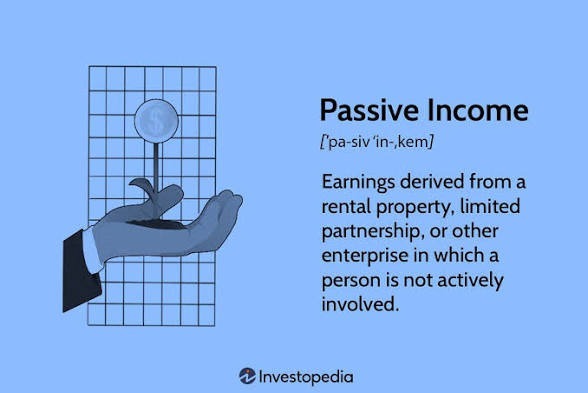
A passive income stream is a source of income that continues generating revenue after the initial work, investment, or setup has been completed. Although no passive income stream is entirely effortless, many require only occasional maintenance while continuing to produce recurring earnings.
Most successful passive income streams are built around income-generating assets, such as rental properties, dividend-paying stocks, digital products, content websites, or automated online businesses. Instead of exchanging hours for dollars every day, these assets continue working long after you’ve built them.
The goal isn’t to stop working entirely. It’s to create systems that allow your money, knowledge, or digital assets to continue earning even when you’re focused elsewhere.
Key Takeaways
- Every passive income stream requires either time, money, or expertise to build.
- Diversifying multiple passive income streams reduces financial risk.
- Digital assets often require less capital than physical investments.
- Reinvesting profits accelerates long-term wealth creation.
- Consistency almost always beats chasing quick wins.
- Some income-generating assets can grow in value or produce income over time, but neither income nor appreciation is guaranteed.
SEE ALSO Top SaaS Tools for Solopreneurs Under $50/Month: Your Complete Budget-Friendly Stack
The 9 Best Passive Income Streams in 2026
Here are the nine top passive income streams you want to take seriously this year and beyond.
1. Digital Products
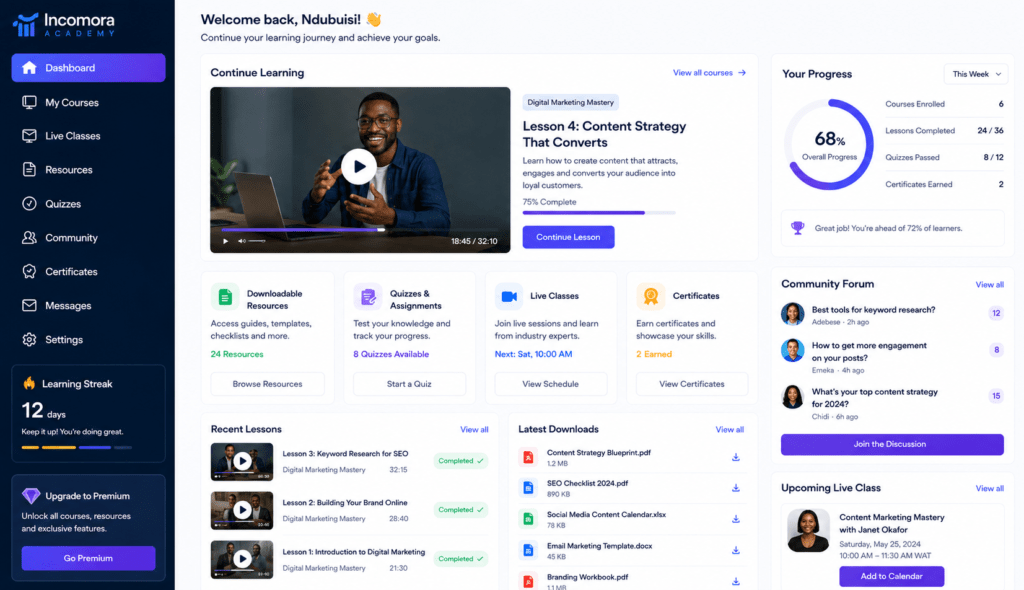
Digital products are one of the highest-margin passive income opportunities available today. Once created, they can be sold repeatedly without manufacturing, inventory, or shipping costs.
Unlike physical products, digital assets can be delivered instantly to customers anywhere in the world, which makes them highly scalable.
Difficulty: ⭐⭐⭐⭐☆
Startup Cost: Low
Scalability: ⭐⭐⭐⭐⭐
Maintenance: Low
Best For: Designers, freelancers, writers, educators, developers
Tips for Success
– Solve one specific problem exceptionally well.
– Focus on quality rather than quantity.
– Include bonuses and templates.
– Collect testimonials and reviews.
– Bundle complementary products together.
Example: A freelance designer creates a premium Canva social media template pack. After several weeks of work, the same pack continues generating sales through the designer’s website and marketplace listings with minimal ongoing effort.
DISCOVER: Best Freelance Websites in 2026: Upwork vs Fiverr vs Toptal Compared
Popular examples of Digital Products:
- eBooks
- Online templates
- Canva designs
- Resume templates
- Business spreadsheets
- AI prompt libraries
- Lightroom presets
- Notion templates
- Website themes
- Printable planners
Why It Works
Digital products are highly scalable.
After investing time into creating a valuable product, sales and delivery can be automated, making them one of today’s most attractive income-generating assets.
Many successful entrepreneurs combine multiple digital products into bundles, increasing average order value while serving customers more effectively.
How to Get Started
- Identify one problem people consistently struggle with.
- Build a practical solution.
- Launch on your website or a trusted marketplace.
- Collect testimonials.
- Improve the product over time.
Risks
- Strong competition
- Product piracy
- Marketing challenges
How to Reduce Your Risk
- Build an email list.
- Optimize for SEO (Search Engine Optimization).
- Update products regularly.
- Focus on solving real problems rather than following trends.
LEARN MORE: The State of AI in 2026: What’s Changing and What It Means for You
2. Rental Property Income
Rental property income (real estate) has created wealth for generations.
Instead of earning only from appreciation, property owners receive recurring monthly rental income while their properties may continue increasing in value.
Rental properties are among the strongest examples of income-generating assets because they can produce several forms of return simultaneously.
Although real estate requires more upfront capital than many passive income strategies, it can produce multiple sources of long-term wealth.
Best for: Long-term investors, high-income earners, people with significant savings, and investors seeking stable cash flow.
Difficulty: ⭐⭐⭐⭐☆
Startup Cost: High
Scalability: ⭐⭐⭐⭐⭐
Maintenance: Medium
Best For: Investors seeking predictable monthly cash flow

Rental Property Generates Wealth Through
- Monthly rent
- Property appreciation
- Mortgage principal reduction
- Tax advantages (where applicable)
- Rental increases over time
Pro Tip: Rental real estate is considered one of the most reliable passive income streams because one investment can generate recurring income for decades when properly managed.
Benefits
– Predictable monthly cash flow.
– Long-term appreciation potential.
– Inflation protection.
– Ability to use borrowed capital.
– Tangible physical asset.
Success Tips
- Buy in growing locations.
- Research rental demand.
- Maintain emergency repair funds.
- Screen tenants carefully.
- Consider professional property management.
Risks Involved
- Vacancies
- Repairs
- Market fluctuations
- Rising interest rates
How to Reduce Risk
– Buy in strong rental markets.
– Maintain proper insurance.
– Keep reserves for emergencies.
– Diversify across multiple properties when possible.
Example: An investor buys a duplex, rents both units, and uses part of the monthly rent to pay the mortgage while building equity over time.
3. Dividend Investing and Stock Market Income
Dividend investing is one of the simplest ways to generate passive income while building long-term wealth.
Instead of relying solely on stock prices increasing, investors receive regular cash payments from companies that distribute part of their profits to shareholders.
Important: Dividend payments are not guaranteed, and dividend-paying stocks or funds can lose value. A company may reduce or stop its dividend, and an investment that pays regular distributions can still produce a negative total return. Diversification can reduce risk but does not eliminate it.
Difficulty: ⭐⭐☆☆☆
Startup Cost: Medium
Maintenance: Very Low
Best For: Beginners and long-term investors
Dividend investing remains one of the simplest passive income strategies.
How Dividend Investing Works
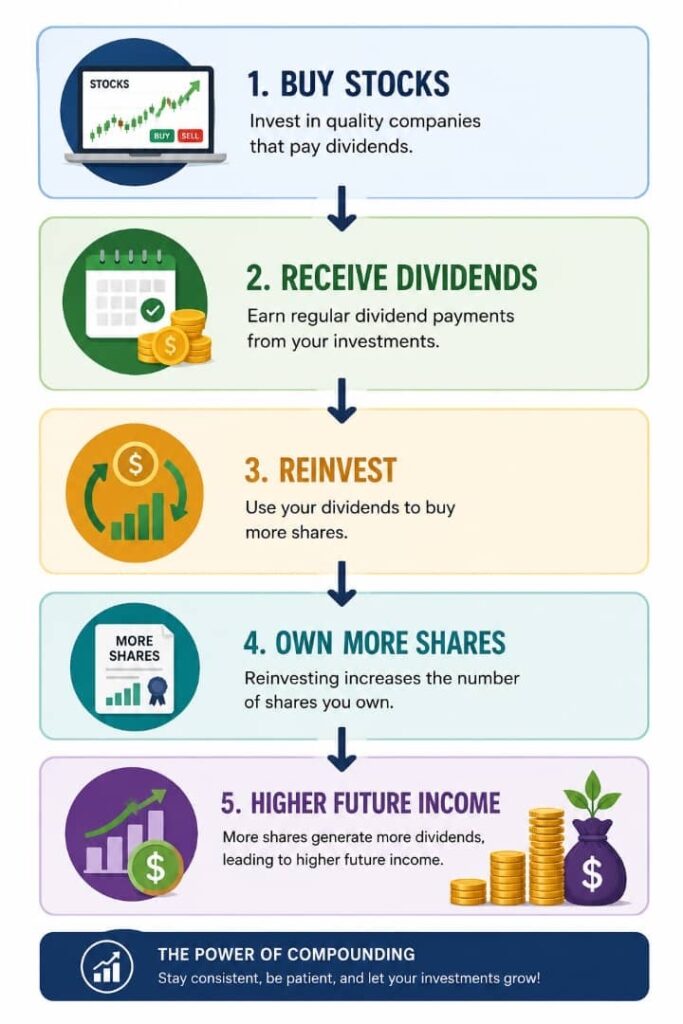
Investors buy shares of companies that regularly pay dividends. These companies usually distribute a portion of profits to shareholders quarterly or semi-annually.
Investors can:
– Spend dividends as income.
– Reinvest dividends to buy more shares.
– Use compounding to grow future payouts.
Advantages
- Very little ongoing work
- Easy to automate
- Excellent for retirement planning
- Portfolio diversification
- Long-term capital growth
Investment Options
– Individual dividend stocks.
– Dividend-focused ETFs.
– Index funds.
– REITs.
Best Practices
– Invest consistently.
– Diversify across sectors.
– Reinvest dividends when possible.
– Focus on financially strong companies with sustainable payout policies.
– Think long term rather than chasing the highest yield.
Risks Involved
– Market volatility.
– Dividend cuts.
– Recessions.
– Inflation.
How to Reduce Risk
Diversify your portfolio, invest regularly through dollar-cost averaging, and avoid concentrating too much in one company or sector.
Example: An investor adds a fixed amount each month to a diversified dividend ETF and automatically reinvests every payout to accelerate compounding.
OUR SUBSCRIBERS ENJOYED LEARNING: How to Invest With Little Money ($100 or Less): Best Beginner’s Guide for 2026
4. Affiliate Marketing
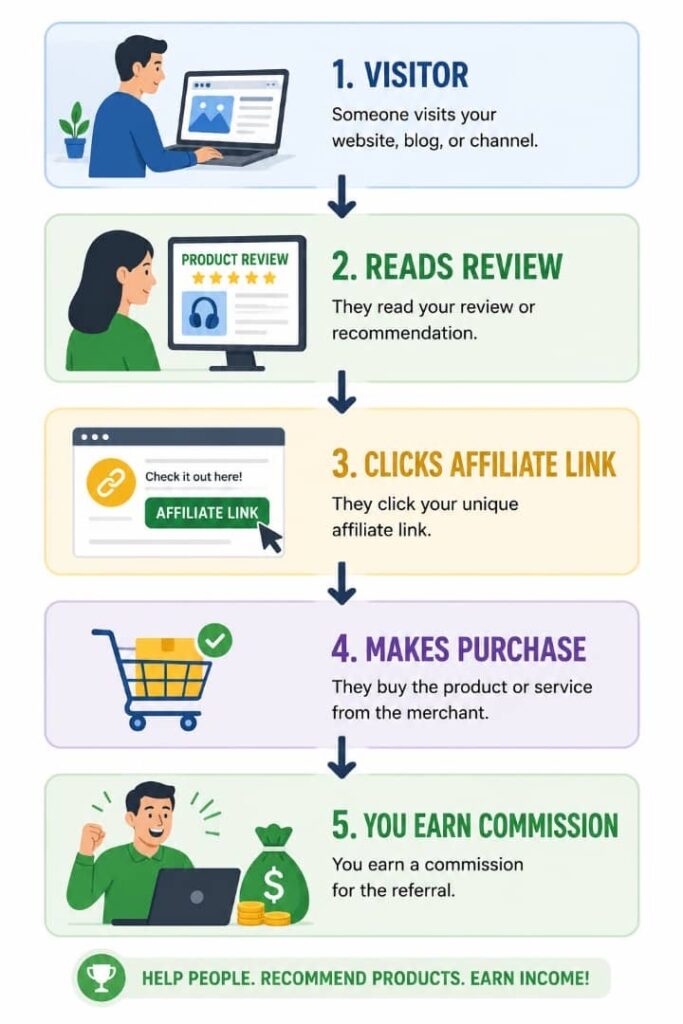
Affiliate marketing is a low-cost, highly scalable way for content creators to earn money by recommending products and services. You earn a commission when someone buys through your unique affiliate link.
Success depends on trust, conversion-focused content, and good tracking.
Affiliate marketing allows creators to earn commissions by recommending products or services. Every time someone purchases through your referral link, you receive a commission.
Unlike traditional sales businesses, you never handle inventory or customer support.
Difficulty: ⭐⭐⭐☆☆
Startup Cost: Low
Scalability: ⭐⭐⭐⭐⭐
Maintenance: Medium
Best For: Bloggers, YouTubers, newsletter publishers
Why It Works
- Very low startup costs
- Unlimited earning potential
- Can monetize existing audiences
- Works alongside blogging, YouTube, and email marketing
Beginner Tip
The highest-earning affiliate marketers focus on helping people solve problems rather than simply promoting products. Trust converts far better than aggressive selling.
Tactical Steps
- Choose high-intent topics such as product reviews, comparisons, and best-of lists.
- Use UTM parameters and affiliate sub-IDs to track campaigns.
- Disclose affiliate relationships clearly and build trust with hands-on reviews or case studies.
- Place links where conversion intent is highest, such as pricing pages, how-to posts, and email sequences.
- Clearly disclose affiliate relationships close to affiliate recommendations and links
Common Commission Ranges
Affiliate commissions vary substantially by merchant, product, country, attribution model, and program terms.
Always verify the current commission structure directly with the affiliate program before estimating potential income.
Risks Involved
– Program changes or cutoffs.
– Low conversion from content.
– Tracking issues.
How to Reduce Risk
– Diversify across multiple affiliate networks.
– Improve calls to action and comparison tables.
– Test links and funnels before scaling.
Example: A technology blogger publishes laptop reviews and earns recurring commissions from software subscriptions recommended in those articles.
Pro Tip: Commission Rates vary by program and region, so always confirm directly with the merchant.
5. Content Websites and Advertising Revenue
A content website is one of the most valuable long-term digital assets you can build.
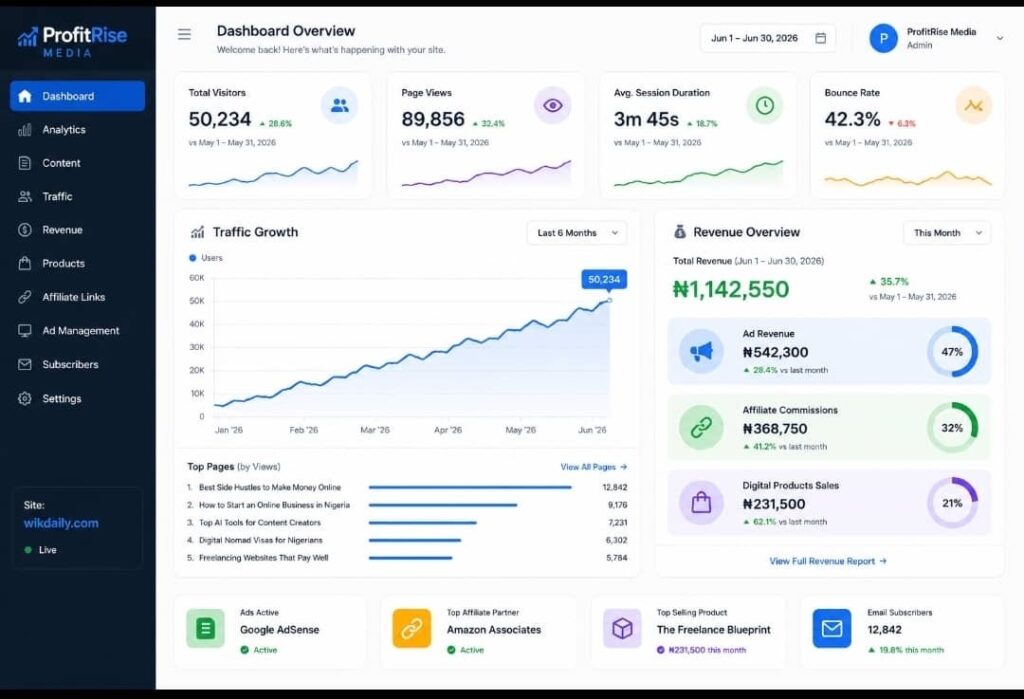
As articles begin ranking in Google, they continue attracting visitors who can generate revenue through:
- Display advertising
- Affiliate marketing
- Sponsored content
- Digital products
- Consulting services
- Email newsletters
Unlike social media, where content often disappears within days, evergreen articles can continue producing traffic for years.
This makes a well-optimized content website one of the strongest long-term passive income streams available.
A well-structured content site is a long-term digital asset that can combine ad revenue, affiliate deals, sponsored posts, and product sales.
It is one of the most flexible passive income models for creators who want to build authority over time.
Difficulty: ⭐⭐⭐⭐☆
Startup Cost: Low
Scalability: ⭐⭐⭐⭐⭐
Maintenance: High
Best For: Writers, publishers, and niche experts
Why It Works
– Evergreen content compounds through organic search traffic.
– Multiple monetization paths reduce single-source risk.
– A site can grow into a brand, not just a blog.
Monetization Mix
– Display ads.
– Affiliate links.
– Sponsored content.
– Digital products.
– Newsletters.
– Consulting or services.
Practical Roadmap
– Build pillar content and cluster posts that link to it.
– Use lead magnets to capture emails.
– Promote digital products or affiliate offers through email sequences.
– Outsource content at scale while keeping editorial control.
Earnings Signals
Website RPM (Revenue Per Mille) is the estimated total earnings a publisher makes per 1,000 pageviews.
RPMs vary widely.
- Website RPM varies widely based on niche, audience location, traffic quality, ad network, seasonality, device mix, and advertiser demand. Check your advertising platform’s current reporting rather than relying on a universal RPM benchmark.
- Premium niches can reach much higher RPMs depending on traffic quality, audience location, and intent.
Risks Involved
– Ads can hurt user experience.
– Search algorithm changes can affect traffic.
– Income may take months or years to grow.
How to Reduce Risk
– Use lazy loading and limit ad density.
– Diversify traffic sources with social and email.
– Focus on topical authority.
Example: A finance blog grows organic traffic and monetizes through ads, affiliates, and digital products.
6. Print-on-Demand

Print-on-demand (POD) allows you to sell customized products without buying inventory upfront. When a customer places an order, a third-party supplier prints, packages, and ships the product on your behalf.
This makes POD one of the easiest passive income stream ideas for beginners looking to build an online brand with minimal financial risk.
Popular products include:
- T-shirts
- Hoodies
- Mugs
- Phone cases
- Journals
- Posters
- Tote bags
- Stickers
Difficulty: ⭐⭐☆☆☆
Startup Cost: Very Low
Scalability: ⭐⭐⭐☆☆
Maintenance: Low
Best For: Designers, artists, niche creators, and entrepreneurs
How It Works
– Upload designs.
– Set prices.
– Promote through SEO, social media, or paid ads.
– The platform handles production and fulfillment.
Why It Works
Unlike traditional e-commerce, you only pay for production after a customer buys.
That means:
- No inventory costs
- No warehouse expenses
- No shipping management
- Low startup costs
As your designs gain popularity, they become digital assets capable of generating recurring sales (income-generating assets).
Tips for Success and Profitability Tips
- Focus on one niche audience. Use niche-focused designs and test creatives with small ad budgets.
- Create unique designs instead of generic quotes.
- Test products before scaling.
- Build a recognizable brand.
- Drive traffic using SEO, Pinterest, and social media.
- Factor in product cost, shipping, and platform fees when pricing.
- Offer bundles or limited releases to increase average order value.
Risks Involved
– Thin margins.
– High competition.
– Fulfillment quality issues.
How to Reduce Your Risk
– Choose reputable POD partners.
– Monitor reviews and quality consistently.
– Focus on niche communities and strong branding
– Partner with reputable print-on-demand companies and regularly review customer feedback to maintain quality.
Example: A creator sells a single design across T-shirts, mugs, hoodies, and posters.
7. Online Courses and Membership Communities
Creating a course or membership community packages your expertise into a monetizable product with recurring revenue potential.
This model works especially well if you already have an audience or a clear niche.
If you have expertise that others want to learn, turning that knowledge into an online course can become a highly profitable passive income stream.
Unlike one-on-one coaching, courses allow you to teach thousands of people without repeating yourself.
Membership communities take this a step further by generating recurring monthly subscriptions.
Difficulty: ⭐⭐⭐⭐☆
Startup Cost: Low–Medium
Scalability: ⭐⭐⭐⭐⭐
Maintenance: Medium
Best For: Coaches, educators, consultants, and subject matter experts
Popular Course Topics
- AI
- Programming
- Digital Marketing
- Graphic Design
- Finance
- Cybersecurity
- Photography
- Productivity
Why It Works
Courses have high profit margins because they require no manufacturing or shipping.
Once created, students can enroll continuously while automated systems handle:
- Payments
- Course delivery
- Email onboarding
- Certificates
- Community access
How to Get Started
- Validate demand.
- Outline your curriculum.
- Record high-quality lessons.
- Host on your own website or learning platform.
- Collect reviews and continuously improve.
Retention Strategies
- Monthly live Q&A sessions
- Downloadable templates
- Private communities
- Certificates
- Bonus resources
Risks
- High upfront effort
- Student support
- Competition
How to Reduce Risk
– Start with a minimum viable course before investing months into production.
– Validate demand before building a full course.
– Use moderators and FAQ resources.
– Start small with a minimum viable course.
Example: A blogger creates an SEO writing course and sells it to new website owners.
8. Automated Online Businesses
Automation uses systems and tools to reduce manual work in businesses such as SaaS, subscription services, digital marketplaces, or automated e-commerce.
Automation has transformed how businesses operate.
Instead of manually responding to every customer, sending invoices, or following up on leads, modern businesses use AI and software to automate repetitive tasks.
Over time, these systems can evolve into what many entrepreneurs call an absentee business—one that continues to operate with minimal day-to-day involvement from its owner.
Examples include:
- SaaS platforms
- Subscription businesses
- Digital marketplaces
- Membership sites
- AI-powered service businesses
These businesses are not fully hands-off, but once systems are in place, they can become highly efficient.
Difficulty: ⭐⭐⭐⭐⭐
Startup Cost: Medium
Scalability: ⭐⭐⭐⭐⭐
Maintenance: Medium
Best For: Entrepreneurs building long-term digital businesses
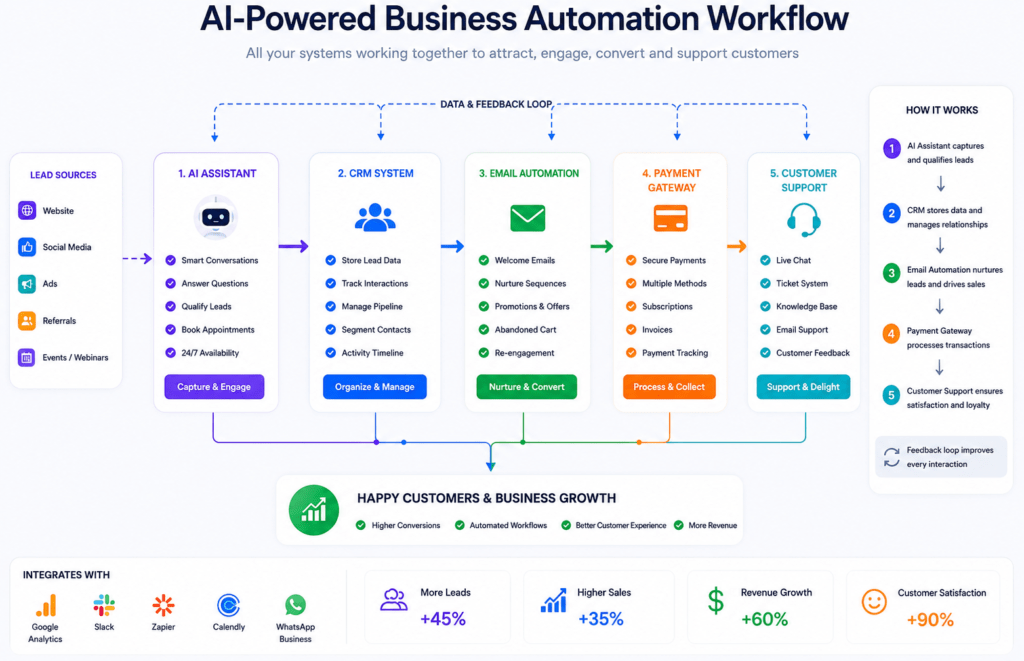
Core Automation Components
- AI assistants
- CRM systems
- Email automation
- Payment gateways
- Customer support systems
Automation Insight
Automation doesn’t eliminate work. It removes repetitive tasks so your passive income stream becomes more scalable while improving customer experience.
Why It Works
Automation allows one business owner to serve thousands of customers simultaneously.
Instead of hiring large teams, workflows handle:
- Lead capture
- Customer onboarding
- Billing
- Email marketing
- Customer support
Risks Involved
- Technical complexity
- Software costs
- Security concerns
How to Reduce Risk
– Start with a narrow offer.
– Use reliable software and payment systems.
– Back up your data and prioritize cybersecurity
– Maintain strong security and compliance practices.
Example: A subscription tool automatically delivers content, bills users, and sends support replies through a chatbot.
9. High-Yield Savings and Fixed-Income Investments
This category generally focuses more on capital preservation and predictable income than the higher-growth options in this guide, but the level of risk depends on the product.
In the U.S., eligible deposits at an FDIC-insured bank are generally insured up to applicable limits; the standard coverage amount is $250,000 per depositor, per insured bank, for each ownership category
High-yield savings accounts, certificates of deposit, treasury bills, and government bonds provide relatively stable returns with significantly lower risk than stocks or business ventures.
Difficulty: ⭐☆☆☆☆
Startup Cost: Low
Maintenance: Very Low
Best For: Conservative investors and emergency funds
Advantages
- Predictable income
- Very low maintenance
- Excellent for emergency funds
- Lower investment risk
Savings and Investment Options
– High-yield savings accounts.
– Certificates of deposit.
– Government bonds.
– Short-term treasury bills.
Why It Works
– Preserves capital.
– Provides predictable returns.
– Suits emergency funds and short-term liquidity.
Limitations
- Lower returns
- May not beat inflation over long periods
- Limited growth potential
This option works best when combined with higher-growth passive income streams rather than replacing them entirely.
Example: Someone keeps emergency funds in a high-yield savings account while using other income streams for growth.
Passive Income Stream Comparison
Definitions of key terms:
– Startup cost: typical upfront capital required.
– Risk: likelihood of principal loss or revenue volatility.
– Scalability: ability to grow revenue without proportionally increasing time or cost.
– Maintenance: ongoing effort required after launch.
| Income Stream | Startup Cost | Risk | Scalability | Maintenance |
| Digital Products | Low | Medium | Excellent | Low |
| Rental Property | High | Medium | Excellent | Medium |
| Dividend Investing | Medium | Medium | Excellent | Very Low |
| Affiliate Marketing | Low | Medium | Excellent | Medium |
| Content Website | Low | Medium | Excellent | High |
| Print-on-Demand | Low | Medium | Moderate | Low |
| Online Courses | Low–Medium | Medium | Excellent | Medium |
| Automated Business | Medium | High | Excellent | Medium |
| High-Yield Savings | Low | Low | Limited | Very Low |
Which Passive Income Stream Is Right for You?
Still unsure where to begin? Here’s a quick recommendation based on your current situation.
| If You Want… | Choose… |
| Low startup cost | Affiliate Marketing |
| Build digital assets | Digital Products |
| Monthly cash flow | Rental Property |
| Retirement income | Dividend Investing |
| Build an absentee business | Automated Online Business |
| Sell your expertise | Online Courses |
| Create long-term authority | Content Website |
| Lowest investment risk | High-Yield Savings |
Common Mistakes to Avoid
1. Expecting Passive Income Immediately
Every successful passive income stream requires initial work, investment, or expertise before generating consistent returns.
2. Depending on One Income Source
Diversifying multiple passive income streams helps reduce financial risk if one source slows down.
3. Ignoring Taxes
Different countries tax passive income differently. Consult a qualified financial or tax professional before making investment decisions.
4. Not Reinvesting Profits
Reinvesting earnings into your best-performing income-generating assets accelerates long-term wealth through compounding.
5. Chasing Trends Instead of Building Assets
Temporary trends come and go.
Assets such as quality content websites, rental properties, dividend portfolios, and digital products often continue generating income for years.
Editorial Note
This guide is based on publicly available financial research, industry best practices, and current market trends available in 2026.
Investment returns, tax regulations, interest rates, and business performance vary by country and individual circumstances. Always perform your own research and consult licensed financial, legal, or tax professionals before making investment decisions.
Final Thoughts
The best passive income stream isn’t necessarily the one promising the highest returns—it’s the one that aligns with your skills, budget, risk tolerance, and long-term goals.
If you’re just getting started, focus on building one reliable passive income stream before expanding into others. Over time, those earnings can be reinvested into additional income-generating assets, creating multiple sources of recurring revenue that strengthen your financial future.
Remember, income made smart isn’t about finding shortcuts to wealth. It’s about creating systems and assets that continue delivering value long after the initial work is done.
Whether you choose dividend investing, rental properties, affiliate marketing, online courses, digital products, or an absentee business, consistency and patience will always outperform chasing quick wins. Subscribe to Incomora for more tips and updates around passive income and building wealth the right way.
Frequently Asked Questions
What is a passive income stream?
A passive income stream is a recurring source of income generated from investments, businesses, or digital assets that require minimal ongoing effort after the initial setup. Examples include dividend stocks, rental properties, digital products, and affiliate marketing.
What are income-generating assets?
Income-generating assets are investments or resources that produce recurring cash flow. Examples include rental real estate, dividend-paying stocks, digital products, content websites, royalties, and automated businesses.
Which passive income stream is best for beginners?
Affiliate marketing, digital products, dividend investing, and high-yield savings accounts are among the best passive income streams for beginners because they require relatively little capital and can scale over time.
What is an absentee business?
An absentee business is a business that operates with minimal day-to-day involvement from its owner because automation, systems, or managers handle routine operations.
How many passive income streams should I have?
There is no perfect number. Many financial experts recommend building multiple passive income streams over time to diversify risk and improve long-term financial stability.
Can I build passive income with little money?
Yes. Many passive income streams (including affiliate marketing, blogging, digital products, print-on-demand, and content websites) can be started with relatively little upfront capital.
Related Articles
Continue your financial and location-independent journey with these guides:
- How to Move to Another Country Without a Job Offer
- Best Digital Nomad Visas in 2026
- 8 Countries Offering Post-Study Work Visas (PSW Visas)
For Further Reading
For additional research, consider these authoritative resources: