
Finding a country that is actively recruiting foreign workers can make an international job search much more realistic. But an “easy work visa” does not mean automatic approval or a guaranteed job.
In this guide, easy work visa countries are countries with relatively clear skilled-worker pathways, employer sponsorship systems, shortage occupations, transparent eligibility rules, or routes that allow qualified foreign professionals to enter and look for work.
For skilled workers, the most important question is therefore not simply, “Which country gives visas easily?” It is: “Which country has an immigration route that matches my skills, qualifications, salary level, occupation, and ability to secure an employer?”
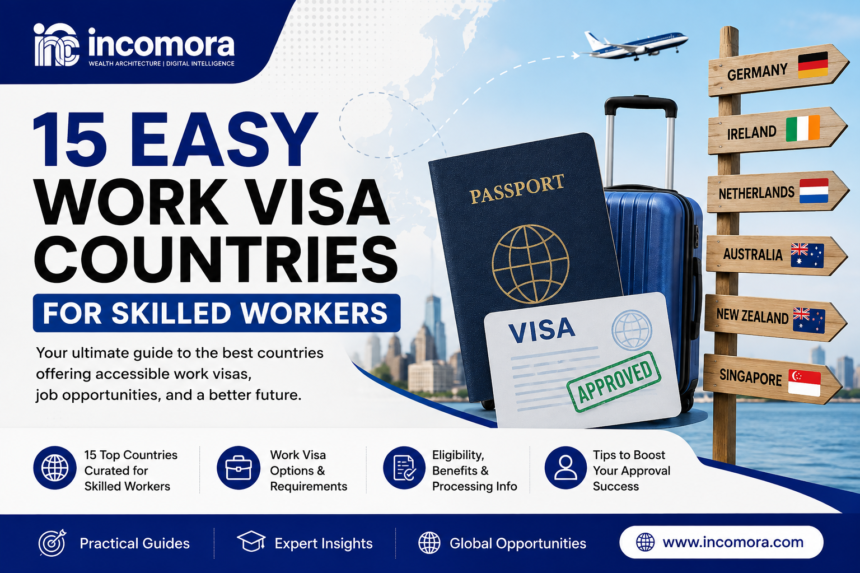
This guide compares 15 countries worth considering, the work route typically used by foreign skilled workers, whether you generally need a job offer first, and what makes each route worth investigating.
Immigration rules, salary thresholds, occupation lists, fees, and processing times can change. Always confirm the current requirements on the destination country’s official immigration website before applying.
Read Also: 8 Countries Offering Post Study Work Visas (PSW Visas): Duration, Work Rights & PR Pathways Compared
TL;DR
- Germany is one of the strongest options for skilled workers who do not yet have a job because its Opportunity Card allows eligible applicants to enter Germany to search for employment for up to one year.
- Ireland is particularly attractive for workers whose occupations appear on its Critical Skills Occupations List, which was updated again in 2026.
- The Netherlands offers a structured Highly Skilled Migrant route, but you generally need an employment contract with an employer recognised by the Dutch immigration authority.
- New Zealand’s main employer-sponsored route is now the Accredited Employer Work Visa, not the old Essential Skills Work Visa. Applicants generally need a full-time offer from an accredited employer.
- Australia’s Temporary Skill Shortage visa has been replaced by the Skills in Demand visa. Skilled applicants generally need nomination by an approved sponsor and an eligible occupation or stream. (Immigration and citizenship Website)
- Singapore has clear Employment Pass and S Pass systems, but qualifying salaries and employer requirements make these more suitable for competitive skilled applicants than casual job seekers. (Ministry of Manpower Singapore)
- Poland, Czechia, Latvia, Luxembourg, and Iceland all have work-and-residence routes for non-EU nationals, but employer involvement is usually required. (Gov.pl)
- No country should be treated as a guaranteed “easy visa” destination. Your occupation, employer, experience, salary, nationality, documentation, and immigration history still matter.
What Does “Easy Work Visa Country” Actually Mean?
There is no official immigration category called an “easy work visa.”
For this article, a country ranks well when it has several of the following characteristics:
- A clearly defined work visa or residence route.
- Skilled occupations that employers struggle to fill locally.
- Employer-sponsored processes that are relatively structured.
- Published qualification or salary requirements.
- A route for job seekers who do not yet have an employer.
- Online application systems or recognised-employer programmes.
- Opportunities for longer-term residence after qualifying employment.
That definition is more useful than simply ranking countries by visa processing time.
A country may process applications quickly but require an employer that is difficult to secure. Another country may take longer but provide a route to enter and search for work.
How We Ranked These Countries
The 15 easy work visa countries are ranked using an editorial accessibility score, rather than claimed visa approval rates.
| Factor | Weight |
| Accessibility of the skilled-worker route | 20% |
| Availability of skilled-worker pathways | 20% |
| Job-search flexibility | 15% |
| Employer sponsorship accessibility | 15% |
| Transparency of eligibility requirements | 10% |
| Labour-market demand | 10% |
| Potential for longer-term residence | 10% |
What the Score Means
A higher score means that, compared with the other countries in this guide, the country offers a combination of clearer skilled-worker pathways, accessible sponsorship arrangements, labour-market opportunities, transparent requirements, or greater flexibility for eligible applicants.
This does not mean that a country ranked #1 is easier for every individual than a country ranked #10.
For example, Germany ranks highly because eligible applicants can use the Opportunity Card to search for employment without first having a permanent job offer. Ireland may be a stronger choice for someone whose occupation appears on its Critical Skills Occupations List, while the Netherlands may be better suited to a professional who already has an offer from a recognised sponsor.
The ranking is therefore a general accessibility comparison, not an individual immigration assessment.
Visa approval still depends on your occupation, qualifications, experience, salary, nationality, language ability, employer, documentation, and immigration history.
The 15 Easy Work Visa Countries at a Glance
| Country | Main Skilled-Worker Route | Job Offer Usually Needed First? | Why It Stands Out |
| Germany | Opportunity Card / Skilled Worker Visa / EU Blue Card | Not always | Job-search route available |
| Ireland | Critical Skills / General Employment Permit | Yes | Strong shortage-occupation system |
| Netherlands | Highly Skilled Migrant | Yes | Recognised-sponsor system |
| New Zealand | Accredited Employer Work Visa | Yes | Accredited-employer route and residence options |
| Australia | Skills in Demand Visa | Yes for employer-sponsored route | Structured skilled occupation system |
| Portugal | Residence visa for employed work | Usually | Formal residence route for foreign workers |
| Singapore | Employment Pass / S Pass | Yes | Fast employer-led online process |
| Estonia | Employment/residence routes | Usually | Digitised immigration environment |
| Czechia | Employee Card | Yes | Work and residence combined |
| Poland | Work permit + visa / temporary residence | Usually | Large employment market and employer-led route |
| Latvia | Work-authorised D visa/residence route | Yes | Clear visa with employment rights |
| Lithuania | Employment-based residence routes | Usually | Skilled and highly skilled routes |
| Luxembourg | Salaried Worker / EU Blue Card | Yes | Strong demand for qualified international workers |
| Iceland | Work + residence permit | Yes | Routes for expert knowledge and labour shortages |
| South Korea | E-series skilled/professional visas | Yes for most employment routes | Multiple occupation-specific work categories |
1. Germany
Germany belongs near the top of any list of easy work visa countries for skilled workers because applicants are not always required to secure a job before travelling.
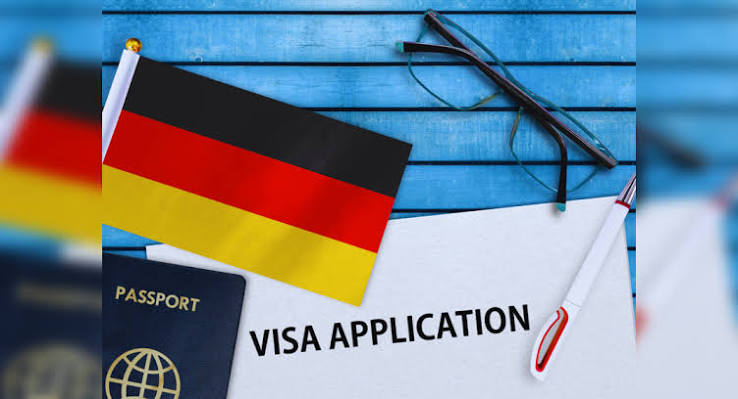
The country’s Opportunity Card allows qualifying foreign workers to enter Germany for the purpose of looking for employment or self-employment opportunities. The initial Job Search Opportunity Card can be granted for up to one year. Germany currently requires applicants to demonstrate sufficient funds, with the 2026 standard listed at €1,091 per month.
Other routes include:
- EU Blue Card.
- Skilled Worker residence permits.
- Recognition-related immigration routes.
- Employer-sponsored skilled employment.
Why Germany stands out
Germany is particularly attractive to:
- Engineers.
- IT professionals.
- Healthcare workers.
- Technical specialists.
- Skilled tradespeople.
- Workers whose qualifications can be formally recognised.
Important distinction
The older phrase “Germany Job Seeker Visa” still appears frequently online, but applicants should check whether the Opportunity Card is now the more appropriate route for their circumstances.
Best suited to: Skilled workers who want a route that may allow them to search for jobs before securing permanent employment.
See Also: How to Move to Another Country Without a Job Offer: 11 Legal Pathways That Work
2. Ireland
Ireland has one of Europe’s clearest employment-permit systems for workers whose skills are in demand.
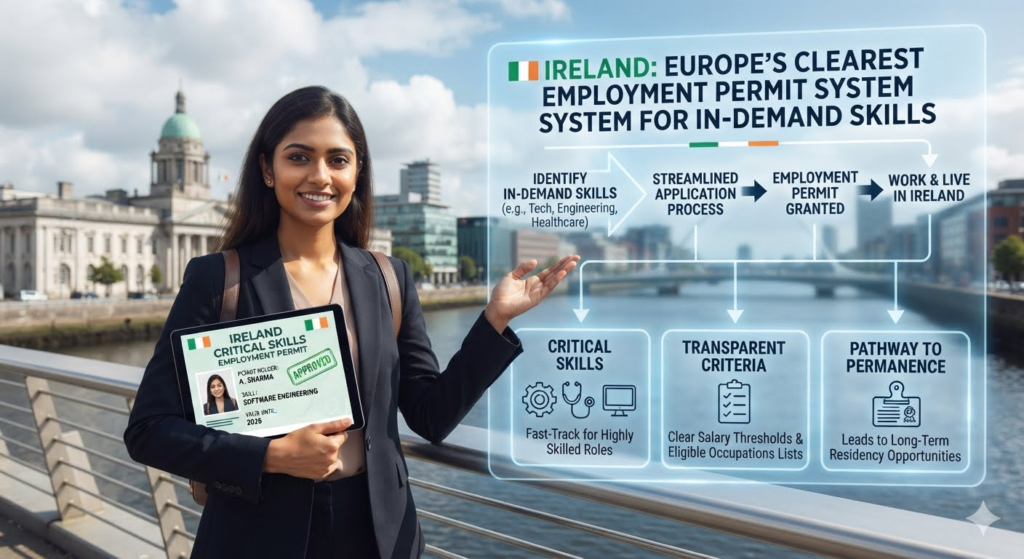
The two routes most applicants encounter are:
- Critical Skills Employment Permit.
- General Employment Permit.
Ireland maintains an official Critical Skills Occupations List covering professions where skills shortages exist. The list was updated in May 2026, including additions in construction, healthcare, intellectual property, and other areas.
Salary rules have also changed. From March 2026, the standard minimum annual remuneration for Critical Skills permits increased to €40,904, while the standard General Employment Permit threshold increased to €36,605, with some occupation-specific exceptions.
Why Ireland stands out
Ireland can be particularly attractive for:
- ICT professionals.
- Engineers.
- Healthcare professionals.
- Scientists.
- Construction specialists.
- Certain financial and business professionals.
The government also publishes current permit-processing dates rather than giving applicants a vague generic estimate.
Best suited to: Professionals whose occupation appears on the Critical Skills list or qualifies for a General Employment Permit.
Discover: Best Countries for Digital Nomads in 2026: Requirements, Costs, and Lifestyle Compared
3. Netherlands
The Netherlands has a structured route known as the Highly Skilled Migrant residence permit.

You generally need:
- An employment contract with a Dutch organisation.
- An employer recognised as a sponsor by the Immigration and Naturalisation Service.
- The applicable income requirement.
- A salary considered appropriate for the market.
The IND maintains a public register where applicants can verify whether an organisation is a recognised sponsor.
Recognition matters because recognised sponsors can benefit from a faster and more streamlined immigration procedure. The IND states that it tries to decide recognised-sponsor applications within two weeks in many cases, although some applications can take longer.
Why the Netherlands stands out
The process is highly employer-driven and relatively transparent once you have secured the right company.
Netherlands can be particularly attractive to:
- Software engineers.
- Data professionals.
- Engineers.
- Researchers.
- Finance professionals.
- Highly skilled corporate workers.
Best suited to: Experienced professionals who can target employers already listed as recognised sponsors.
Our Subscribers Enjoyed Reading:12 Best Digital Nomad Visas in 2026: Requirements, Costs, Taxes & Top Countries Compared
4. New Zealand
New Zealand is another country frequently mentioned among countries with accessible work visa opportunities
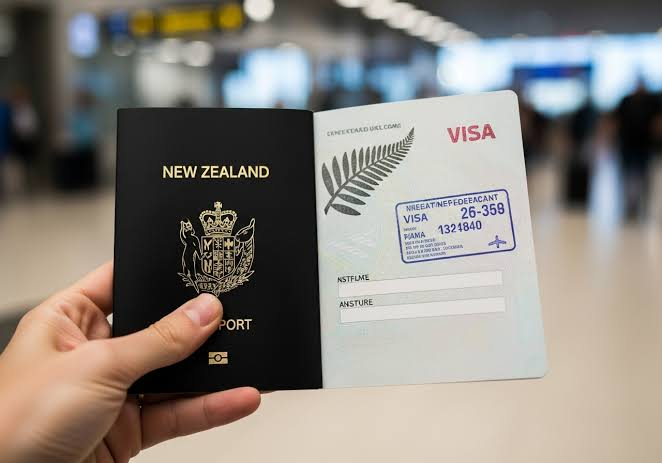
The main employer-sponsored temporary route is now the Accredited Employer Work Visa (AEWV).
To qualify, you generally need:
- A full-time job offer.
- At least 30 hours of work per week.
- An employer accredited for the AEWV.
- The required experience or qualifications.
- Occupational registration where relevant.
- English proficiency for specified skill levels.
The visa can allow a stay of up to five years depending on the job and circumstances, and some workers may later qualify for residence.
New Zealand also maintains an official searchable list of accredited employers.
Why New Zealand stands out
Instead of guessing which employers can sponsor workers, applicants can verify employer accreditation directly.
Best suited to: Skilled workers targeting accredited employers, particularly in occupations connected to New Zealand’s skills and shortage frameworks.
5. Australia
Australia remains a major destination for skilled migrants, but one important update matters.
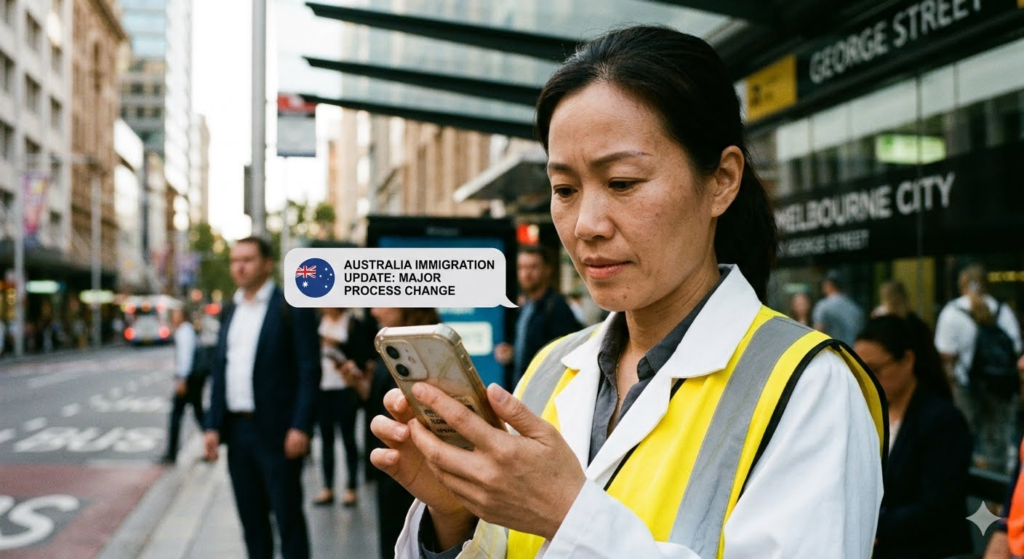
The old Temporary Skill Shortage subclass 482 route has been replaced by the Skills in Demand visa.
The current Skills in Demand subclass 482 generally requires an applicant to:
- Be nominated for an eligible skilled position by an approved sponsor.
- Have the required skills.
- Meet applicable English requirements.
Under the Core Skills stream, applicants generally need an occupation on the Core Skills Occupation List and at least one year of relevant work experience.
The visa can generally allow a stay of up to four years and may provide a route towards permanent residence for eligible applicants.
Why Australia stands out
Australia has:
- Employer-sponsored routes.
- Independent and state-nominated skilled migration.
- Published occupation criteria.
- Skills-assessment systems.
- Potential permanent-residence pathways.
Best suited to: Experienced skilled workers whose occupations align with Australia’s current skilled migration lists.
6. Portugal
Portugal remains relevant for non-EU workers seeking employment-based residence.
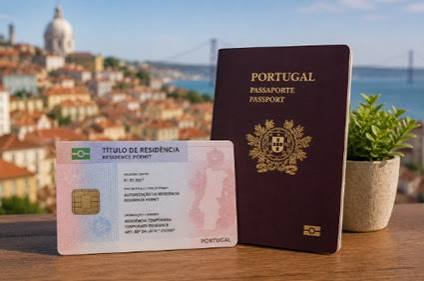
Its official government portal provides a residence visa route for non-EU/EEA/Swiss citizens who intend to perform dependent employment in Portugal. (Gov.pt)
There is also a temporary-stay visa route covering certain employed or independent work situations.
Why Portugal stands out
Portugal attracts workers because of:
- Employment-based residence routes.
- A growing international workforce.
- Demand across various sectors.
- Broader relocation options beyond traditional employer sponsorship.
Important caution
Some competitor articles promote a “20-day Green Route” as if every worker can use it. Do not assume a fast-track programme applies to your occupation, employer, or nationality without checking the current official Portuguese rules.
The official Portuguese visa portal currently states that the skilled job-seeker visa was not yet available at consular offices pending regulation.
Best suited to: Workers who have secured qualifying Portuguese employment and want an employment-based residence route.
Compare: Spain vs Portugal Digital Nomad Visa: Major Requirements & Costs
7. Singapore
Singapore has one of the most structured employer-led work-pass systems in Asia.

Two important routes are:
Employment Pass
This is aimed at foreign professionals, managers, and executives.
Current requirements include a minimum qualifying salary beginning at S$5,600 for most sectors, increasing with age. Most applicants must also pass the COMPASS points framework.
S Pass
The S Pass is intended for skilled associate professionals and technicians. Singapore’s S Pass is a competitive employer-sponsored route with qualifying salary and employer requirements.
The current general minimum qualifying salary is S$3,300, with higher thresholds for older applicants and the financial-services sector.
The employer or appointed employment agent submits the application. Online S Pass applications are generally processed or given an update within 10 business days.
Best suited to: Experienced professionals, technical workers, and skilled employees who can secure a qualifying Singapore employer.
8. Estonia
Estonia is frequently discussed among easy work visa countries because of its digital-first government environment and relatively straightforward immigration processes.
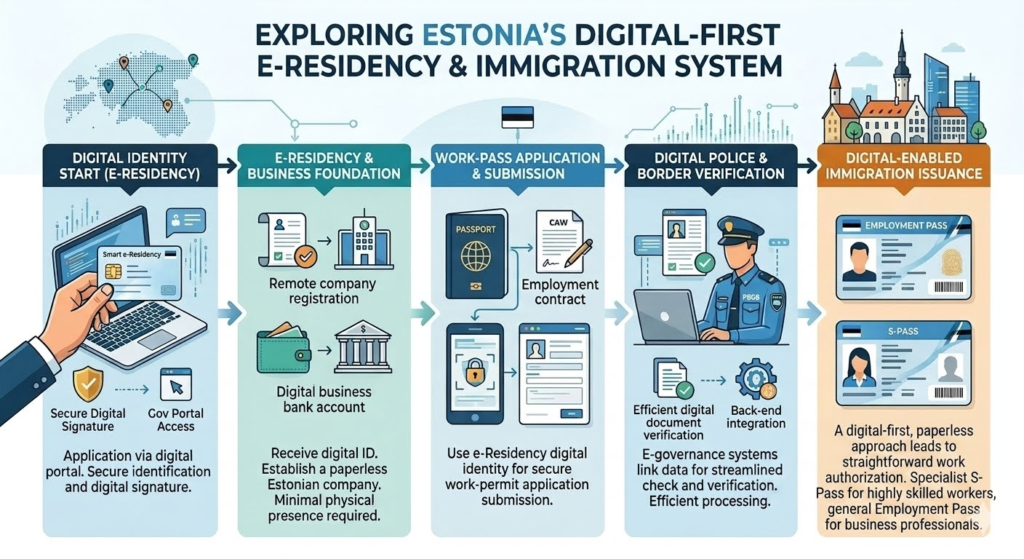
Foreign workers may use long-stay employment and residence routes depending on the duration and type of work.
The practical advantage is less about a visa being “easy” and more about Estonia having a relatively small, digitally advanced economy with demand for some specialised international talent.
Areas worth investigating include:
- Software development.
- Technology.
- Engineering.
- Startups.
- Specialist professional services.
Applicants should still verify whether their employer must register short-term employment or whether a residence permit is required for the intended period.
Best suited to: Technology and specialist professionals who secure an Estonian employer.
9. Czechia
Czechia offers the Employee Card, which combines long-term residence and employment permission for third-country nationals.
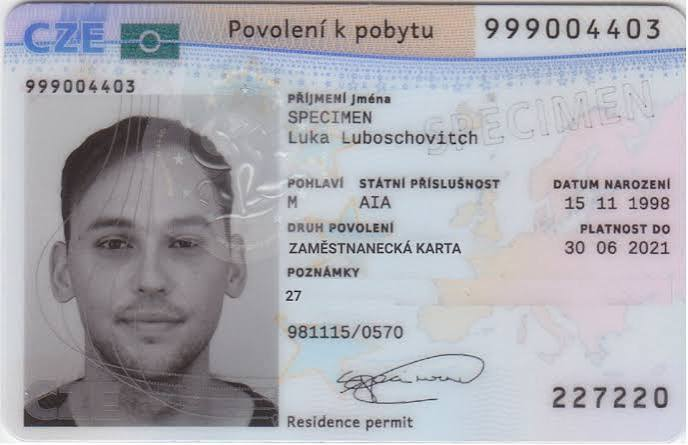
The Employee Card can cover many different types of employment and can be valid for up to two years, depending on the employment arrangement.
The official immigration portal currently lists:
- A CZK 2,500 administrative fee for the relevant domestic procedure.
- A statutory 60-day processing period in standard cases.
Why Czechia stands out
Instead of dealing with completely separate long-term residence and employment documents, the Employee Card creates a combined framework.
Best suited to: Workers who have secured qualifying Czech employment and want a combined employment-and-residence route.
10. Poland
Poland has a large labour market and several routes used by third-country workers.

For many foreign employees, the process begins with the employer obtaining a work permit. The worker then uses that permit as part of the visa process. Poland’s Office for Foreigners confirms that, unless an exemption applies, the future employer generally obtains the work permit before the worker applies for a work visa.
A Polish national D visa can generally be valid for up to one year, while a temporary residence and employment permit can be issued for between three months and three years.
Poland also made an important digital change in 2026: from April 27, residence-permit applications covered by the new MOS system must be submitted electronically.
Best suited to: Workers with genuine Polish employer sponsorship, particularly in sectors where employers actively recruit internationally.
11. Latvia
Latvia provides visas carrying a right to employment.

According to Latvia’s Office of Citizenship and Migration Affairs, a foreign national who intends to work on the basis of a visa.
Possible routes include:
- Short-stay C visa for qualifying short employment.
- Long-stay D visa for longer work.
- Residence permits depending on the employment arrangement.
A long-stay D visa with employment rights may be issued for up to one year.
Best suited to: Workers who already have a qualifying Latvian employer and want a clearly defined employment-authorised visa route.
12. Lithuania
Lithuania continues to offer employment-based residence routes, but applicants should be cautious with old blog posts describing the process as universally “simplified.”
Lithuania changed parts of its foreigners law again in May 2026, including provisions affecting employers and residence permits for foreign workers.
The country also distinguishes between priority and non-priority residence applications. Highly qualified employment is among the priority categories, while some ordinary work applications are treated differently.
Why Lithuania can still be attractive
Highly qualified professionals may benefit from immigration routes designed specifically around skilled employment.
Best suited to: Qualified professionals who have secured an employer and can meet the current residence and employment conditions.
13. Luxembourg
Luxembourg has routes both for general salaried workers from third countries and highly qualified workers.
For a standard salaried worker staying longer than three months, the process generally involves:
- Obtaining temporary authorisation to stay before entering Luxembourg.
- Obtaining a Type D visa where required.
- Completing arrival formalities.
- Applying for the residence permit.
Employers generally declare vacancies to ADEM, Luxembourg’s employment agency, before recruiting third-country workers.
Highly qualified applicants may instead qualify for an EU Blue Card.
Best suited to: Highly qualified professionals and skilled workers who secure a Luxembourg employment contract.
14. Iceland
Iceland provides temporary work permits for several categories, including:
- Expert knowledge.
- Labour shortages.
- Special circumstances.
- Certain specialised employees.
For people outside the EEA/EFTA, a work permit is generally required.
The employer normally submits the work-permit application alongside the residence application, and the employee cannot generally start working until the permit has been granted.
An expert-knowledge residence permit may be granted for up to four years, subject to the underlying work-permit validity.
Iceland also changed its administration in July 2026, transferring responsibility for processing work permits to the Directorate of Immigration.
Best suited to: Professionals with specialised expertise or workers recruited into genuine shortage occupations.
15. South Korea
South Korea has multiple employment visa categories rather than one general “skilled worker visa.”
Professional routes include E-series visas covering occupations such as:
- Professors.
- Foreign-language instructors.
- Researchers.
- Technical professionals.
- Certain specialised occupations.
For most employment routes, a qualifying South Korean employer or employment relationship is required.
South Korea can therefore be worth considering for professionals whose experience fits a specific visa category, but applicants should identify the correct visa before accepting an offer.
Best suited to: Professionals whose qualifications and job offer align closely with one of South Korea’s defined employment categories.
Which Country Is Easy to Get a Work Visa in Europe?
Based on accessibility of skilled-worker routes rather than guaranteed approval, five European destinations worth investigating are:
- Germany
- Ireland
- Netherlands
- Czechia
- Poland
Germany deserves particular attention if you do not yet have employment because the Opportunity Card can provide an eligible applicant with a route to enter and search for work.
Ireland and the Netherlands are stronger options when you already have highly marketable skills and can secure an employer.
Czechia and Poland can be worth considering where employers are actively recruiting foreign workers.
This directly addresses the search query “which country is easy to get a work visa in Europe,” but there is no single easiest European country for every applicant.
Which Easy Work Visa Country Is Best for Your Situation?
| Your Situation | Countries to Research First |
| No job offer yet | Germany |
| IT/software professional | Germany, Ireland, Netherlands, Estonia |
| Healthcare professional | Ireland, Germany, New Zealand, Australia |
| Engineer | Germany, Ireland, Netherlands, Australia |
| Skilled technical worker | New Zealand, Australia, Germany |
| Highly skilled corporate professional | Netherlands, Singapore, Luxembourg |
| Want a combined work/residence route | Czechia, Poland |
| Want employer accreditation you can verify | Netherlands, New Zealand |
This is a starting framework, not an eligibility decision.
The most realistic destination is usually the country where your occupation appears in demand and where you can satisfy the actual immigration requirements.
Documents Skilled Workers Commonly Need
The exact checklist differs by country and visa type, but work visa applications commonly require some combination of:
- Valid passport.
- Employment contract or formal job offer.
- Employer sponsorship or work permit approval.
- Degree, diploma, trade qualification, or professional certification.
- Evidence of relevant work experience.
- Professional registration for regulated occupations.
- Proof of salary.
- Police or criminal-record certificate.
- Medical examination where required.
- Health insurance where required.
- Evidence of sufficient funds in some categories.
- Passport photographs or biometrics.
- Translated or legalised documents where required.
- Visa and residence application forms.
- Government application fees.
Do not assume that every country requires every item on this list.
For example, employer-sponsored systems such as New Zealand’s AEWV have requirements tied directly to the accredited employer and job offer, while Germany’s Opportunity Card places more emphasis on your own qualifications and financial ability while job searching.
How to Improve Your Chances of Getting a Work Visa
Target shortage occupations
Start with the country’s official shortage or skilled occupation list rather than applying randomly.
Ireland publishes its Critical Skills Occupations List. New Zealand provides Green List and work-visa skill information. Australia uses occupation lists within its skilled visa framework.
Verify the employer
Employer legitimacy matters.
For the Netherlands, verify whether the company appears on the IND’s recognised sponsor register.
For New Zealand, use Immigration New Zealand’s accredited employer search.
Never pay someone simply because they promise a sponsored job.
Check the visa before accepting the job
A job offer does not automatically mean you qualify for the visa.
Confirm:
- Occupation eligibility.
- Minimum salary.
- Required experience.
- Qualification recognition.
- Language requirements.
- Employer status.
Prepare documents early
Qualification assessments, criminal records, professional registrations, translations, and document legalisation can take longer than expected.
Do not rely on old visa names
This is particularly important.
Examples:
- Australia’s Temporary Skill Shortage route has been replaced by the Skills in Demand visa.
- New Zealand’s primary employer-sponsored route is the Accredited Employer Work Visa.
- Germany now has the Opportunity Card for eligible job seekers.
Always check the official immigration website before building your plans around a blog post.
Common Mistakes to Avoid When Choosing an Easy Work Visa
Here are five common mistakes to avoid when choosing a work visa.
1. Assuming “Easy” Means Guaranteed
No legitimate country guarantees a work visa because your occupation is in demand. “Easy” means relatively accessible for the right applicant, not that approval is automatic.
2. Paying for Fake Sponsorship
A genuine employer will follow the destination country’s legal recruitment process. New Zealand explicitly states that employers or agents cannot charge workers fees for a job or make them pay recruitment costs connected to an AEWV.
3. Applying for the Wrong Visa Category
A developer, nurse, construction worker, researcher, and seasonal worker may all need different immigration routes even within the same country.
4. Ignoring Salary Thresholds
Countries such as Ireland, Singapore, and the Netherlands use salary thresholds within important skilled-worker routes.
5. Trusting Outdated Processing Times
Processing time is particularly unstable.
Instead of treating a blog’s “two weeks” or “30 days” as guaranteed, check the government’s current processing tool or current-case dates when available.
How We Selected These Countries
This comparison is based on practical characteristics that make a country more accessible to qualified foreign workers, including:
- Presence of a defined skilled-worker route.
- Employer-sponsored programmes.
- Job-search pathways.
- Published occupation and salary criteria.
- Government-recognised sponsor systems.
- Labour-shortage routes.
- Possibility of longer-term residence.
- Availability of official immigration guidance.
We deliberately do not rank countries based purely on alleged visa approval rates because approval depends heavily on applicant profile and reliable comparable approval-rate data is not available for every programme.
We also checked current government sources because several popular work-visa guides still contain visa names, salary figures, and immigration rules that have already changed.
Final Verdict
The best easy work visa countries for skilled workers are not necessarily the countries with the shortest application form or fastest advertised processing time.
The strongest opportunities are countries where your skills match a genuine labour-market need and where the immigration route is clear enough for you and your employer to follow correctly.
Germany ranks first in this guide because it combines multiple skilled-worker pathways with the Opportunity Card, which can allow eligible applicants to enter Germany and search for employment without first securing a permanent job offer.
Ireland and the Netherlands follow closely because of their structured skilled-worker systems. Ireland has a Critical Skills Occupations List, while the Netherlands operates a recognised-sponsor system for Highly Skilled Migrants.
New Zealand and Australia provide structured employer-sponsored routes, while Czechia, Poland, Latvia, Lithuania, Luxembourg and Iceland can offer realistic opportunities for workers with the right occupation and employer.
Singapore is particularly attractive to professionals and skilled technical workers who can meet its salary and employer requirements.
Before applying, verify three things:
- Is your occupation eligible?
- Does your employer meet the sponsorship requirements?
- Do you personally meet the salary, qualification, experience, language, and documentation rules?
If all three align, the visa becomes much more realistic.
The goal should not be to find a country that “gives visas easily.” It should be to find the country where your profile gives you the strongest legitimate chance of approval.
Frequently Asked Questions (FAQ)
What are the easiest work visa countries?
There is no single easiest country for everyone. Germany, Ireland, the Netherlands, New Zealand, Australia, Czechia, and several other countries have relatively structured pathways for skilled foreign workers. The best option depends on your occupation, experience, salary, qualifications, and whether you already have a job offer.
Which country is easy to get a work visa in Europe?
Germany is one of the most flexible options because eligible skilled workers may use the Opportunity Card to enter Germany and search for work without first having a permanent job offer. Ireland and the Netherlands are strong alternatives for applicants who already have in-demand skills and qualifying employers. (Bundesagentur für Arbeit)
What countries are easy to get a work visa?
Countries worth researching include Germany, Ireland, the Netherlands, New Zealand, Australia, Portugal, Singapore, Estonia, Czechia, Poland, Latvia, Lithuania, Luxembourg, Iceland, and South Korea. “Easy” means the route is relatively structured or accessible for the right applicant, not that approval is automatic.
Can I get a work visa without a job offer?
Sometimes. Germany’s Opportunity Card is a notable example because qualifying applicants can use it to enter the country to look for employment. Most countries in this guide, however, generally require a job offer or employer involvement for their main work routes.
Which country is best for skilled workers?
There is no universal winner. Germany offers broad skilled-worker routes; Ireland has a strong Critical Skills system; the Netherlands has a recognised-sponsor framework; Australia operates several skilled migration routes; and New Zealand combines accredited-employer work visas with residence pathways for some occupations.
Which country gives the fastest work visa?
Processing time changes frequently and depends on application completeness, occupation, employer, nationality, and government workload. Avoid choosing a country solely because a blog claims a particular processing time. Check the relevant authority immediately before applying.
Do I need a university degree to get a work visa?
Not always. Some visa routes are designed for degree-qualified professionals, while others recognise vocational training, technical skills, occupational registration, or relevant work experience. Requirements depend on the country and visa category.
Is a job offer enough to guarantee a work visa?
No. You may still need to satisfy salary, qualification, experience, language, health, character, occupation, employer, and immigration requirements.
What is the easiest country to get a work visa without a job offer?
Germany is one of the strongest options to investigate because its Opportunity Card allows eligible foreign workers to enter Germany to search for employment. Applicants can qualify as recognised skilled workers or through the points system, subject to the applicable requirements.
For applicants using the points route, at least six points are required, and applicants must also meet the applicable qualification, language and financial requirements. For 2026, the official financial requirement is €1,091 net per month.
However, “without a job offer” does not mean “without requirements.” You still need to qualify for the Opportunity Card and demonstrate that you can support yourself while searching for employment.
Most other countries in this guide generally require a job offer or employer involvement for their main skilled-worker routes.
Best option to investigate without a job offer: Germany.
Best options when you already have a strong job offer: Ireland, Netherlands, New Zealand, Australia and Singapore, depending on your occupation and qualifications.