
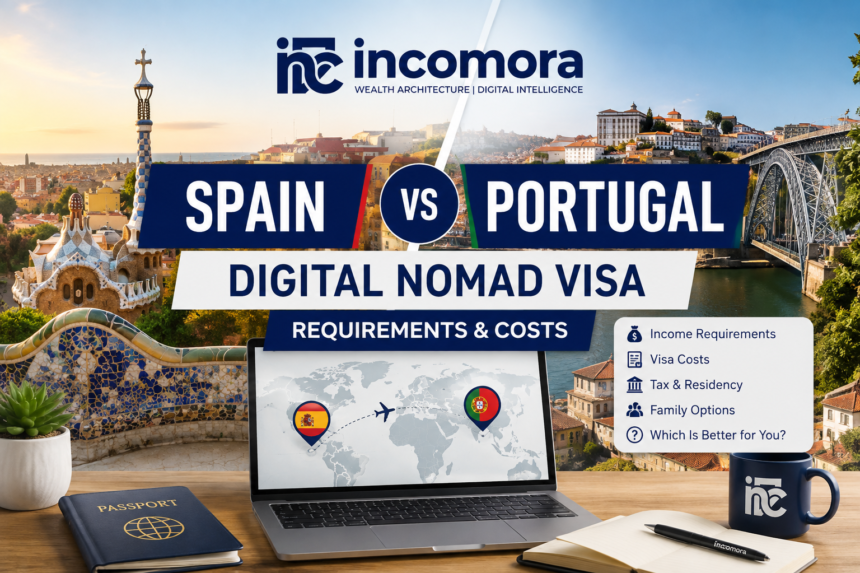
Spain and Portugal are often grouped when remote workers start looking at Europe, and it is easy to see why. Both offer warm weather, strong infrastructure, access to the Schengen Area and legal residence routes for people earning remotely from abroad.
But the two visas are not interchangeable.
Spain generally has the lower income threshold, a potentially longer initial residence authorization and more flexibility for self-employed professionals who want some Spanish clients. Portugal asks for higher qualifying income but remains attractive to people who want to establish themselves in Portugal rather than simply spend a year working remotely.
So if you are comparing the Spain vs Portugal digital nomad visa, the decision should not come down to beaches, weather, or Instagram photos. Income, employment structure, family situation, taxes, application route, and long-term plans matter much more.
This guide compares both options side by side using current government rules and recent program information. Immigration requirements can change, so always verify the final requirements with the relevant Spanish or Portuguese authority before applying.

TL;DR
- Spain and Portugal both offer legal routes for remote workers, but they differ in income requirements, application structure, taxes, family rules, and long-term residence planning.
- Spain currently has the lower income requirement, making it more accessible to some mid-income remote workers.
- Spain also gives qualifying self-employed professionals more flexibility, including limited work with Spanish clients.
- Portugal’s D8 route can suit higher-earning remote workers who specifically want to establish residence in Portugal.
- Both countries allow qualifying family members, but dependants increase the financial and documentation requirements.
- Tax residency is separate from visa approval, so applicants should assess tax exposure before relocating.
- There is no universal winner. Spain is often stronger on accessibility and freelancer flexibility, while Portugal can be the better fit for applicants whose long-term plan is specifically Portugal.
Read Also: Best Countries for Digital Nomads in 2026: Requirements, Costs, and Lifestyle Compared
Spain vs Portugal Digital Nomad Visa at a Glance
| Feature | Spain | Portugal |
| Visa/route | International Teleworker Visa / Residence Authorization | D8 Digital Nomad Visa |
| Approx. 2026 monthly income | €2,849 | €3,680 |
| Employees | Generally foreign employers | Foreign employers |
| Freelancers | Spanish professional activity can generally represent up to 20% of total activity | Must meet the D8 remote-income requirements |
| Applying from abroad | Visa can be valid for up to 1 year | Residence visa route before residence permit |
| Applying from within the country | Eligible applicants may obtain a residence authorization of up to 3 years | Residence permit generally begins with a 2-year period |
| Family | Yes, subject to additional requirements | Yes, subject to additional requirements |
| Tax | Depends on individual circumstances | Depends on individual circumstances |
| Best suited to | Lower-income qualifying applicants and some freelancers | Higher-income applicants seeking Portuguese residence |
Very Important: Spain’s one-year visa and potential three-year residence authorization are not the same thing.
If you apply for the Spanish international telework visa from outside Spain, the visa can generally be issued for up to one year. If you are legally in Spain and qualify for the residence route, you may be able to obtain an international telework residence authorization valid for up to three years.
Portugal’s D8 route follows a different structure, generally beginning with a residence visa before the applicant proceeds to the residence-permit stage.
Spain’s international teleworker rules are established under Law 14/2013. The law allows qualifying self-employed professionals to perform some work for Spanish businesses, provided the Spanish activity does not exceed 20% of total professional activity. Employees, however, must work for companies outside Spain.
Spain or Portugal: Which Digital Nomad Visa Is Better?

Spain will usually be the easier option for remote workers who want a lower qualifying income requirement, a potentially three-year residence authorization when applying from within Spain, and limited ability to earn income from Spanish clients as a self-employed professional.
Portugal may be more attractive if you specifically want to establish residence in Portugal and can comfortably satisfy its higher income requirement.
For 2026, recent program information places the minimum monthly income at approximately €2,849 for Spain and €3,680 for Portugal.
That difference alone means Spain may be accessible to a wider group of mid-income remote workers.
However, income is only one part of the comparison.
See Also: 12 Best Digital Nomad Visas in 2026: Requirements, Costs, Taxes & Top Countries Compared
Spain Digital Nomad Visa Requirements
Spain officially refers to this route as the international telework visa/residence authorization.
It is intended for qualifying third-country nationals who work remotely using digital or telecommunications systems for companies or professional relationships outside Spain.
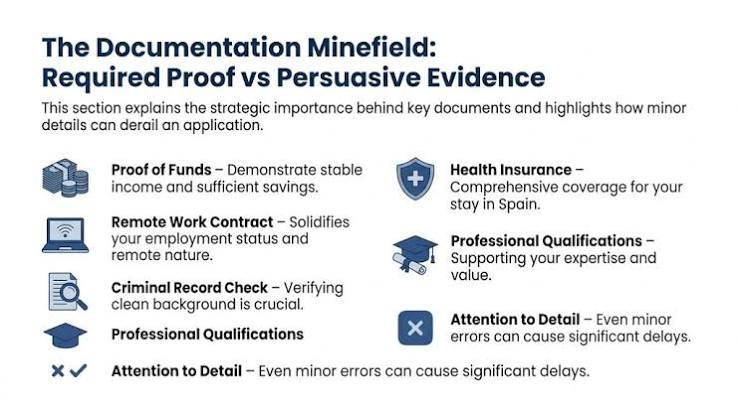
Applicants should generally expect to demonstrate:
- A qualifying remote employment or professional relationship.
- Sufficient financial resources to meet the required income threshold.
- An employment relationship or professional relationship that satisfies the relevant duration requirements.
- At least three years of relevant professional experience or an appropriate university, postgraduate, vocational-training or business-school qualification.
- A clean criminal record for the required period.
- Health insurance or appropriate healthcare coverage, depending on the application route and circumstances.
- A valid passport.
- A medical certificate where required.
- Evidence that the applicant can perform the work remotely using digital or telecommunications systems.
- Documentation relating to the foreign employer or professional clients.
- Evidence of the applicant’s professional relationship with the employer or clients.
- Compliance with Spanish social security requirements, where applicable.
- Apostilled or legalized documents where required.
- Certified Spanish translations where required.
- The relevant application forms and government fees.
The exact documents can vary depending on whether you apply through a Spanish consulate abroad or through the relevant residence authorization route in Spain.
Applicants should therefore check the current checklist issued by the Spanish authority or consulate handling their application.
Spanish law also specifies that applicants should generally have a recognised university/postgraduate qualification, vocational training/business-school qualification, or at least three years of professional experience.
Spain vs Portugal: Cost Comparison
| Cost | Spain | Portugal |
| Visa/application fee | Varies by route and location | Varies by application stage and location |
| Residence permit/card | Additional costs may apply | Additional costs apply |
| Health insurance | May be required depending on circumstances | May be required depending on circumstances |
| Criminal-record documents | Variable | Variable |
| Medical documentation | May be required | May be required |
| Certified translations | Variable | Variable |
| Apostille/legalization | Variable | Variable |
| Accommodation | Variable | Variable |
| Rental deposit | Variable | Variable |
| Flights/travel | Variable | Variable |
| Immigration/legal assistance | Optional | Optional |
| Family applications | Additional costs | Additional |
The biggest mistake is comparing only the headline visa fee and assuming that one country is automatically cheaper.
For many applicants, rent, deposits, insurance, translations, legalization, flights, and tax advice can cost considerably more than the visa application itself.
Can freelancers work with Spanish clients?
This is one of Spain’s biggest advantages and something many basic comparison articles do not explain clearly.
If you are self-employed, Spanish law permits you to carry out work for a Spanish company as long as that work represents no more than 20% of your total professional activity.
Employees do not get the same flexibility. If you are applying as an employee, your employer must be outside Spain.
That distinction can materially affect which visa suits you.
Our Subscribers Enjoyed Reading: Best Freelance Websites in 2026: Upwork vs Fiverr vs Toptal Compared
Portugal Digital Nomad Visa Requirements
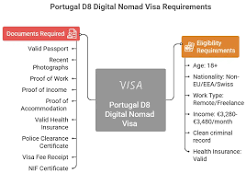
Portugal’s digital nomad route is commonly known as the D8 visa.
It is designed for qualifying non-EU/EEA remote workers, including:
- Employees working remotely for foreign companies.
- Self-employed professionals serving foreign clients.
- Freelancers with qualifying professional income.
- Independent contractors who can demonstrate an eligible remote-work relationship.
- Other qualifying remote professionals who meet the D8 requirements.
Applicants should generally expect to demonstrate:
- Qualifying remote employment or professional activity.
- Sufficient monthly income to meet the D8 financial requirement.
- Proof of income for the required period.
- Employment contracts, service agreements, or other evidence of the professional relationship.
- Proof of accommodation in Portugal.
- A valid passport.
- A clean criminal record.
- Appropriate health or travel insurance where required.
- Bank statements and other financial evidence.
- Tax-residence documentation where required.
- Relevant application forms.
- Certified, translated, or legalized documents where required.
- Payment of the applicable visa and residence-permit fees.
Portugal’s income requirement is linked to four times the country’s minimum wage. With the Portuguese minimum wage at €920 per month in 2026, the corresponding D8 income benchmark is approximately:
€920 × 4 = €3,680 per month
The D8 route generally begins with a residence visa that allows the applicant to enter Portugal before proceeding to the residence-permit stage.
Income Requirements: Spain vs Portugal
Income is where the difference between the two programs becomes immediately noticeable.
Spain
For 2026, Spain’s international telework route uses a financial requirement based on 200% of the Spanish minimum interprofessional wage (SMI).
This produces an annualized requirement of approximately:
€34,188 per year
or approximately:
€2,849 per month
when the annual amount is divided across 12 months.
Additional financial resources are required when qualifying family members accompany the main applicant.
Because the Spanish income threshold is linked to the country’s minimum wage, the required amount can change when the SMI changes.
Portugal
Portugal’s D8 route requires qualifying applicants to demonstrate monthly income equal to approximately four times the Portuguese minimum wage.
For 2026:
€920 × 4 = €3,680 per month
This means Portugal’s reported income threshold is approximately:
€831 more per month than Spain’s €2,849 benchmark.
Income Winner: Spain
Spain currently has the lower qualifying income threshold.
This does not automatically make Spain the better country, but it means Spain may be accessible to a wider group of mid-income remote workers.
For example, a remote worker earning €3,000 per month may potentially meet Spain’s income benchmark while remaining below Portugal’s €3,680 D8 threshold.
Spain vs Portugal Digital Nomad Visa Costs
The visa application fee is only one part of the total cost of relocating.
Applicants should also budget for documentation, insurance, accommodation, and other administrative expenses.
Spain Costs
Depending on the application route and individual circumstances, applicants may need to budget for:
- International telework visa or residence-authorization application fees.
- Residence-card or administrative fees where applicable.
- Health insurance or healthcare-related costs where required.
- Criminal-record certificates.
- Medical certificates where required.
- Certified translations.
- Apostilles or document legalization.
- Passport photographs and administrative documentation.
- Travel to the relevant Spanish consulate or immigration office.
- Accommodation and rental deposits.
- Optional immigration or legal assistance.
The exact government fees can vary depending on where and how the application is submitted, so applicants should confirm the current fee with the relevant Spanish authority or consulate.
Portugal Costs
Portugal applicants should also budget for:
- D8 visa application fees.
- Residence-permit fees.
- Health or travel insurance where required.
- Criminal-record documentation.
- Certified translations.
- Apostilles or document legalization.
- Passport photographs and administrative documents.
- Accommodation and rental deposits.
- Travel expenses.
- Optional immigration or legal assistance.
The exact amount payable can vary according to the application stage, nationality, location, and current government fee schedule.
A More Realistic Relocation Budget
Consider two hypothetical remote workers.
Remote worker A
- Single.
- Earns €3,100 monthly.
- Works entirely for a US employer.
- Wants to spend several years in Southern Europe.
Spain immediately has an eligibility advantage because the worker clears Spain’s current income requirement but does not meet Portugal’s reported €3,680 monthly threshold.
Remote worker B
- Earns €6,000 monthly.
- Works with clients entirely outside Europe.
- Specifically wants to build a life in Portugal.
The income difference is irrelevant here. Lifestyle, taxation, housing, renewal rules, and long-term residence plans become much more important.
This is why comparing these visas purely by minimum income can produce the wrong decision.
Which Visa Is Better for Freelancers?
Spain has a particularly useful provision for qualifying independent professionals.
A self-employed international teleworker may carry out professional activity for Spanish businesses, provided that the Spanish activity does not exceed 20% of the applicant’s total professional activity.
That can matter for:
- Freelancers with occasional Spanish clients
- Consultants
- Software developers
- Web developers
- Graphic and UI/UX designers
- Marketing professionals
- SEO specialists
- Content creators
- Coaches
- Other independent professional service providers
For example, a freelancer could maintain the majority of their foreign client base while taking on a limited amount of qualifying professional work from Spanish businesses.
Employees do not have the same flexibility. Employees applying through Spain’s international telework route generally need to work for companies located outside Spain.
For qualifying freelancers who want limited local-client flexibility, Spain has a clear advantage.
Which Visa Is Better for Remote Employees?
Both Spain and Portugal accommodate qualifying remote employees who work for foreign businesses.
For employees, the decision is likely to depend more on:
- Monthly income
- Employer location
- Length and nature of the employment relationship
- Employer approval for international remote work
- Social Security arrangements
- Health insurance
- Tax consequences
- Housing costs
- Family circumstances
- Long-term residence plans
- The employer’s ability to comply with the laws of the country where the employee will live
Spain’s lower income requirement may make it more accessible to some remote employees.
However, having a remote-work contract does not automatically mean that your employer will allow you to relocate permanently to another country.
International relocation can create payroll, employment-law, Social Security, tax, permanent-establishment, and data-protection issues for an employer.
Get written approval from your employer before building your relocation plan around either visa.
Spain vs Portugal for Families
Both Spain and Portugal have routes that can accommodate qualifying family members.
However, families should not compare only the main applicant’s income requirement.
Your realistic budget should include:
Main applicant income + spouse/partner requirement + child requirements + housing + insurance + schooling + relocation expenses.
For Spain, additional financial resources are required for accompanying family members under the international telework framework.
Portugal also has family-reunification provisions, although the exact eligibility requirements, documentation, and timing can depend on the circumstances of the applicant and family members.
For families, compare:
- Total required income
- Number of dependants
- Housing costs
- Health insurance
- Schooling
- Childcare
- Transportation
- Family-reunification costs
- Tax implications
- Long-term residence plans
A visa that looks cheaper for a single applicant may not necessarily be the cheaper option for a family.
Visa Duration and Renewal
One of the most important differences between Spain and Portugal is the distinction between a visa and a residence authorization or permit.
Spain
Applying from outside Spain
The Spanish international telework visa can generally be issued for up to one year.
Applying while legally in Spain
A qualifying applicant who is legally present in Spain may be able to obtain an international telework residence authorization valid for up to three years.
This distinction is important.
It would therefore be misleading to simply write:
“Spain’s digital nomad visa lasts three years.”
A more accurate explanation is:
Applying from abroad → International telework visa of up to 1 year
Applying from within Spain while legally present → Potentially up to 3-year international telework residence authorization
Qualifying applicants may subsequently renew their residence authorization while continuing to meet the relevant requirements.
Portugal
Portugal’s D8 route generally begins with a residence visa that allows the applicant to enter Portugal.
The applicant then proceeds to the residence-permit stage.
The resulting residence permit is generally issued for an initial two-year period and can be renewed when the applicant continues to satisfy the relevant requirements.
Duration Winner: It Depends on the Application Route
Spain may offer an advantage to eligible applicants who are already legally in Spain and can obtain the longer residence authorization.
Portugal follows a different structure in which the applicant generally enters Portugal using the residence visa before receiving the residence permit.
Taxes: The Part You Should Not Ignore
A digital nomad visa is an immigration status.
It is not automatically a tax exemption.
That distinction is one of the most important things to understand before choosing Spain or Portugal.
In Portugal, becoming tax resident generally depends on factors including spending more than 183 days in the relevant period or maintaining a home that indicates an intention to use it as a habitual residence. Portuguese tax residents generally have to declare worldwide income.
Portugal’s old Non-Habitual Resident regime should also not be casually presented as a benefit available to every new digital nomad. Portugal now has the IFICI incentive for qualifying scientific, innovation and certain highly skilled activities, but eligibility is narrower and subject to specific conditions.
Spain also has tax rules that may apply differently depending on employment status, source of income, residence and eligibility for special regimes.
Before relocating, speak with a cross-border tax adviser who understands:
- Your citizenship.
- Current tax residence.
- Employer location.
- Income type.
- Double-tax treaties.
- Social-security obligations.
Do this before, not after, becoming resident.
What About Permanent Residence and Citizenship?
Both countries can become long-term residence destinations, but digital nomads should separate three concepts:
- Visa.
- Residence permit.
- Citizenship.
They are not the same thing.
Portugal’s nationality rules changed in May 2026, and older blog posts may now contain outdated timelines. Current Portuguese Justice guidance includes a 10-year legal-residence route for adult naturalisation under the revised rules.
That is a good example of why immigration articles need regular updates.
Do not choose a digital nomad visa based solely on an old blog claiming “citizenship after X years.” Long-term residence and nationality rules can change independently of digital nomad visa rules.
Portugal vs Spain: Lifestyle Differences That Matter
Visa eligibility is only one part of the decision.
You also need to consider where you would actually enjoy living and working.
Portugal may suit you if you prefer:
- A smaller country that is relatively easy to explore.
- Portuguese culture and lifestyle.
- A slower-paced environment.
- Coastal living.
- A strong international and expat community.
- Smaller cities and towns as alternatives to Lisbon.
- A country where you specifically want to establish residence.
- A more compact geographic environment.
Spain may suit you if you prefer:
- Larger cities and a wider choice of regions.
- A wider range of climates and lifestyles.
- Major cities such as Madrid, Barcelona, and Valencia.
- A larger domestic market.
- Strong transport connections.
- More choices between major cities, coastal areas, and smaller towns.
- A large international community.
- Greater flexibility for qualifying freelancers who want limited Spanish client activity.
Cost of living varies considerably within both countries.
Therefore, it is too simplistic to say:
“Spain is cheaper.”
or:
“Portugal is cheaper.”
Lisbon and Barcelona can have very different housing costs from smaller cities such as Braga, Coimbra, Valencia, or Granada.
Your choice of city can have a much greater impact on your monthly budget than the difference between the two visa programs.
Spain vs Portugal: Which One Should You Choose?
Use this simple framework before applying.
Choose Spain if:
- Your income is between approximately €2,849 and €3,680 per month.
- You want the lower qualifying income threshold.
- You are a freelancer who may want limited Spanish clients.
- You prefer Spain’s cities, lifestyle, or infrastructure.
- You may benefit from applying from within Spain and obtaining a potentially longer residence authorization.
Choose Portugal if:
- You comfortably earn at least €3,680 per month.
- You specifically want to establish residence in Portugal.
- You prefer Portugal’s lifestyle and environment.
- You are comfortable with the higher income requirement.
- Your tax and long-term residence plans work better in Portugal.
If You Qualify for Both
Compare:
- Taxes.
- Housing.
- Family costs.
- Employer requirements.
- Client structure.
- Healthcare.
- Insurance.
- Long-term residence goals.
There is no universal winner. The best visa is the one that fits your actual financial and professional situation..
Documents You May Need
Exact requirements vary depending on your nationality, application route, employment status, and the authority processing your application.
However, applicants should generally expect some combination of the following.
Spain
- Valid passport.
- Visa or residence-authorization application form.
- Passport photographs where required.
- Proof of employment or professional activity.
- Employment contract or professional agreements.
- Proof of income.
- Bank statements or other financial evidence.
- Employer/company documentation.
- Evidence of professional qualifications or relevant experience.
- Criminal-record certificate.
- Medical certificate where required.
- Health insurance or Social Security documentation.
- Social Security registration or applicable certificate of coverage.
- Proof of family relationship for accompanying dependants.
- Apostilled or legalized documents where required.
- Certified Spanish translations where required.
- Proof of payment of applicable fees.
Portugal
- Valid passport.
- D8 visa application form.
- Passport photographs where required.
- Employment contract or service agreements.
- Proof of remote professional activity.
- Proof of income.
- Bank statements.
- Proof of accommodation in Portugal.
- Criminal-record certificate.
- Health or travel insurance where required.
- Tax-residence documentation where applicable.
- Proof of family relationship for accompanying dependants.
- Apostilled or legalized documents where required.
- Certified translations where required.
- Proof of payment of applicable fees.
Important: This is a practical overview, not a substitute for the official document checklist. Requirements can change and may differ according to nationality and application location.
Common Mistakes to Avoid
Choosing solely by income threshold
The cheaper or easier visa may create tax, employment, or family complications later.
Assuming remote work permission equals employer permission
Your immigration status does not override your company’s international remote-work policies.
Ignoring tax residency
You can legally hold a visa and still create tax obligations you were not expecting.
Using outdated citizenship information
Portugal changed its nationality legislation in 2026. Always verify long-term claims against current government information.
Assuming all freelancers are treated like employees
Spain explicitly distinguishes employment from professional activity, including the 20% local-work rule for professionals.
Budgeting only for the visa fee
Housing deposits, insurance, apostilles, translations, and local administrative requirements can dwarf the application fee.
How to Decide Before Applying
Start with four questions:
1. Do you meet the income requirement?
If you earn between roughly €2,849 and €3,680 monthly, Spain currently has the clear advantage based on reported 2026 thresholds.
2. Are you an employee or freelancer? Freelancers who want some local clients may find Spain’s 20% rule useful.
3. Are you moving temporarily or building long-term residence?
Your preferred country may matter more than minor visa-fee differences.
4. What happens to your taxes?
Get personalised tax guidance before establishing residency.
Final Verdict
The Spain vs Portugal digital nomad visa comparison is ultimately less about finding a winner and more about matching the visa to the way you actually work.
Spain currently offers the lower qualifying income threshold and gives qualifying self-employed professionals limited flexibility to work with Spanish clients. Its residence authorization can also provide a relatively long initial period for eligible applicants.
Portugal requires a higher monthly income but remains a strong option for remote workers who specifically want to establish legal residence in Portugal and can comfortably meet the financial requirements.
Before applying, compare more than the visa fee. Look at your income, client structure, taxes, family plans, housing costs, and long-term residence goals.
The right visa is the one that still makes sense after you have moved, not simply the one that looks easiest on the application page. Subscribe to Incomora for more solid updates around visa requirements and other global opportunities.
Frequently Asked Questions
Is Spain or Portugal better for digital nomads?
Spain may suit remote workers who want a lower income threshold and freelancers who may need limited Spanish client work. Portugal can suit higher-income remote professionals who specifically want to establish residence there. Neither country is universally better.
Which has the lower digital nomad visa income requirement, Spain or Portugal?
Spain currently has the lower reported threshold. Recent 2026 program information places Spain at approximately €2,849 per month versus around €3,680 for Portugal.
Can I work for Spanish clients on Spain’s digital nomad visa?
If you qualify as a self-employed professional, Spanish law permits Spanish activity up to 20% of your total professional activity. Employees must work for companies outside Spain.
Can I bring my family on a digital nomad visa?
Both Spain and Portugal provide routes for qualifying family members, although additional financial and documentary requirements apply.
Do digital nomads pay tax in Spain or Portugal?
Potentially, yes. Immigration permission does not eliminate tax obligations. Tax residence depends on factors including time spent in the country, residence circumstances and individual income structure.
How long is Spain’s digital nomad visa valid?
A Spanish international telework visa issued to someone applying from outside Spain can be valid for up to one year. A qualifying residence authorization can be valid for up to three years and renewed in two-year periods.
How long is Portugal’s digital nomad residence permit valid?
Recent program guidance describes the residence route as generally leading to a two-year permit that can be renewed if the applicant continues meeting the requirements.
Portugal vs Spain digital nomad visa: which is cheaper?
Spain’s headline income requirement is currently lower, but that does not automatically mean the overall relocation is cheaper. Insurance, accommodation, document preparation, translations, dependants and tax exposure can materially change the final cost.